Administrative business intelligence connects people, financial, planning, and operational information for management decisions. Within XCORE, a useful view explains what each measure means, how current it is, and which business question it helps answer.
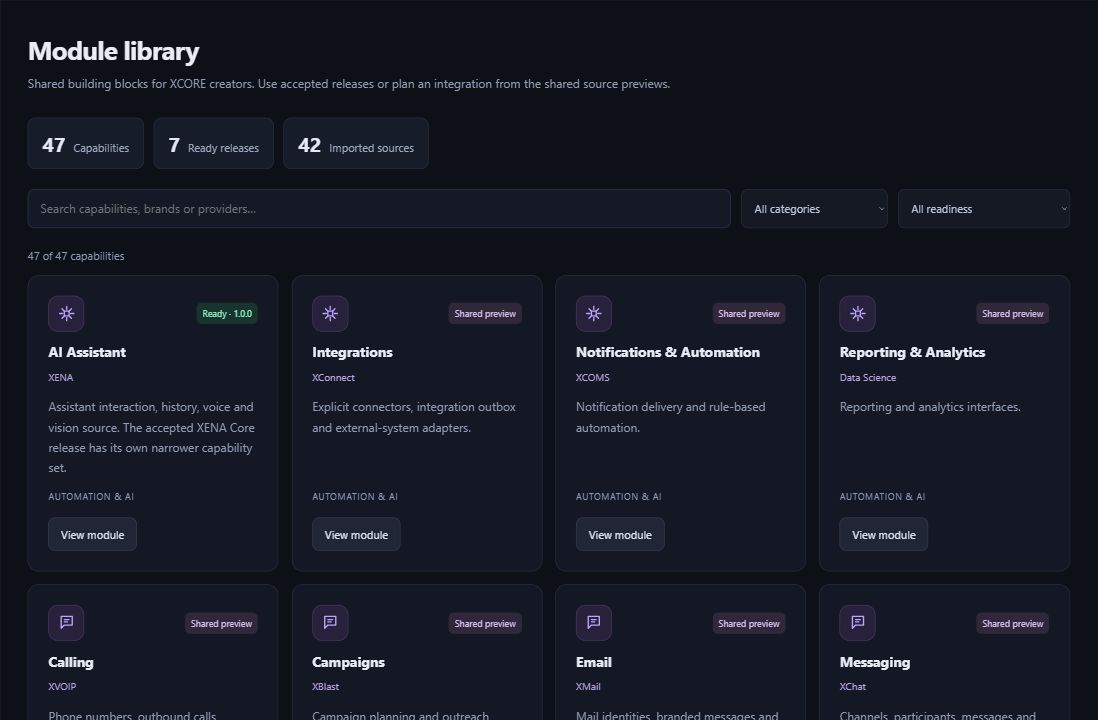
Inside the creation layer · actual XCORE module-library capture, November 2, 2026. Release labels and account permissions apply.
THE PURPOSE IN PRACTICE
Consolidate operational information into reports, dashboards, and analytical views for organizational decisions.
An illustrative management review might compare workload, staffing capacity, spending, and completed delivery. Those records may use different dates, units, and definitions. Agree the period, source, owner, and calculation for each measure before putting them together in one dashboard.
02
Keep interpretation and access proportionate
Summaries can hide missing records, timing differences, or unusually small groups. Explain important limitations and provide an appropriate route to supporting detail. Personnel and financial data also need role-based access. Predictive analysis, refresh schedules, and system connections require a defined implementation rather than an assumption that a combined chart is authoritative.
PLAN YOUR IMPLEMENTATION
Match the scope to your needs.
Choose the business tools your organization needs. Our team can confirm the app, access, connections and setup for your company before implementation.
How is administrative intelligence different from a standard report?+
A standard report presents defined records or totals. Intelligence connects several measures to a management question and requires interpretation of differences, assumptions, and constraints. Both need clear sources and ownership.
Can departments use different definitions of the same metric?+
They can, but the difference should be visible. For example, work completed and invoices issued may describe different stages. A shared management view should reconcile or clearly distinguish those meanings instead of silently combining them.
Who should see the underlying detail?+
Access should follow business responsibility and the sensitivity of the source. A manager may need an aggregate capacity measure without unrestricted access to every employee or financial record.
Does a predictive dashboard establish a reliable forecast?+
No. Predictions depend on suitable history, assumptions, and validation. A useful scope defines the question and how later results will be checked, rather than presenting a model output as a guaranteed business outcome.
THE PEOPLE’S CORPORATION
A future for people.
Personal control. Human opportunity. Stronger local economies and a voice for communities.