
XCORE PLATFORM / CONNECTED CAPABILITIES

XGHOST Cloud Infrastructure
Built around your work.

Plan the cloud foundation for business data, application stacks, connected devices, scalability, backup, and access.

UNDERSTAND THE CONNECTION

The infrastructure should serve the application and its people.

XGHOST is the cloud-infrastructure direction associated with XGlobe’s wider technology architecture. The profile connects application stacks, business data, device connections, capacity, recovery, and access. It describes the foundation a deployment needs, with actual hosting, provider, and operating arrangements established for that deployment.

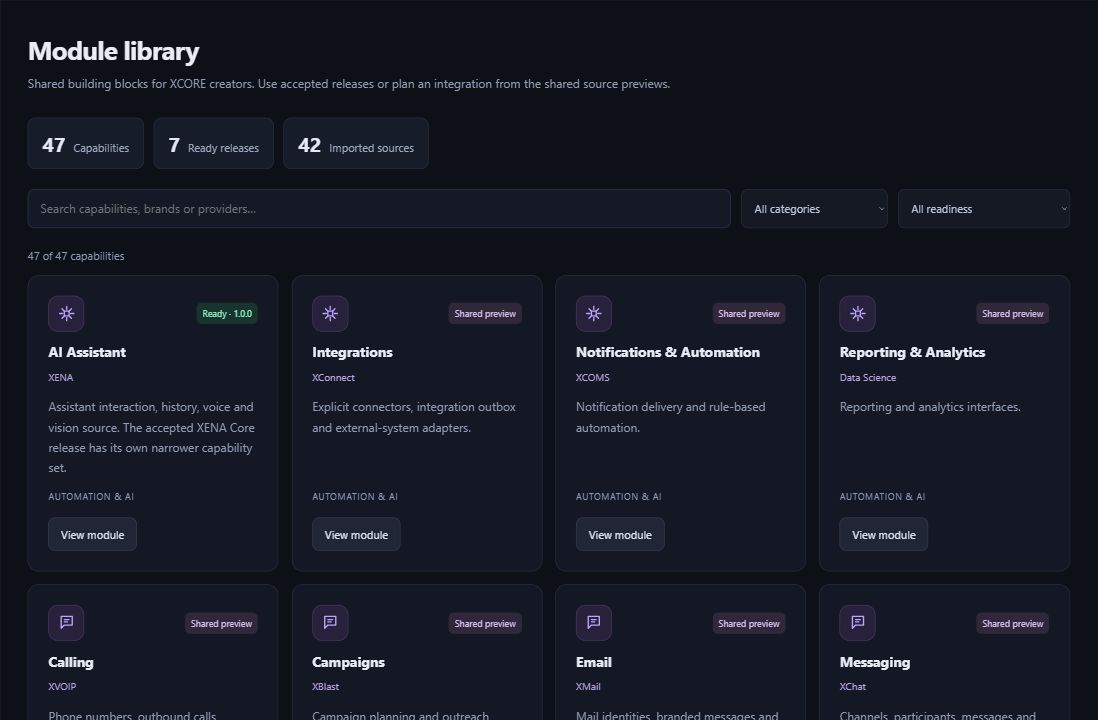
Actual XCORE Creator Studio module library showing ready releases and shared source previews.
Inside the creation layer · actual XCORE module-library capture, November 2, 2026. Release labels and account permissions apply.
THE PURPOSE IN PRACTICE

Plan the cloud foundation for business data, application stacks, connected devices, scalability, backup, and access.

The mission behind the work

Start with the workload and its dependencies

An illustrative business application may need a web service, database, file storage, external provider connections, and a route for users to sign in. Each component has an owner, configuration, access boundary, and failure mode. A prebuilt stack can provide a starting structure, but the business still needs to know what data it holds, what it depends on, and who maintains it.

Device or IoT connections add their own network, identity, and data-ingestion requirements. Enterprise performance depends on actual usage, record volume, concurrency, storage, and provider behavior. A cloud label alone does not establish capacity, availability, geographic placement, or the suitability of a particular architecture.

Plan operation, recovery, and change

Scope backups, restore checks, monitoring, logs, updates, secrets, permissions, and how a new application release reaches the environment. Define which failures create alerts and who can act. A recovery plan should explain the relevant data and service dependencies rather than assume that a single server backup captures every external system.

XGHOST, XWARE, and the XPOD home-computing project have different roles. A corporate cloud deployment is not proof that family-controlled home infrastructure has shipped. Likewise, tailored application development and hosting operation are distinct responsibilities, even when they are discussed as part of one project.

PLAN YOUR IMPLEMENTATION

Match the scope to your needs.

Choose the business tools your organization needs. Our team can confirm the app, access, connections and setup for your company before implementation.

PART OF THE LARGER SYSTEM

Make the next connection.

QUESTIONS & ANSWERS

A clearer picture.

The details that help you choose your next step.

Is XGHOST a publicly orderable cloud service?

This page presents the infrastructure direction and scoping requirements. Any available hosting service needs a current provider, defined resources, commercial terms, operating responsibilities, and support arrangement; those are not established by the profile alone.

What is meant by an application stack?

A related set of components that an application needs, such as its service, database, storage, and supporting connections. The actual components, versions, access, and maintenance obligations should be documented for the deployment.

Does cloud hosting replace a backup and recovery plan?

No. Hosting and recovery address different needs. Define what is backed up, how long it is kept, who can restore it, and how the restored service is checked, including dependencies outside the main server.

How is XPOD different from this cloud direction?

XPOD explores family-controlled home computing and data. XGHOST focuses on cloud foundations for apps and businesses. Contact the team to discuss the option you need and what is available.

What information helps scope infrastructure?

The applications, user patterns, data types, current providers, connected systems, recovery needs, access roles, and expected operating responsibilities. Begin with workload and business requirements rather than choosing a server size without context.

THE PEOPLE’S CORPORATION

A future
for people.

Personal control. Human opportunity.
Stronger local economies and a voice for communities.

Join XGlobeExplore the mission
SEARCH THE WHOLE ECOSYSTEM Press Esc to close
FIND THE RIGHT FIT

Your products, side by side.