Table metadata records the meaning, ownership, structure, and context of business data. Within XCORE, it connects technical information with the people who enter, interpret, maintain, and support the records.
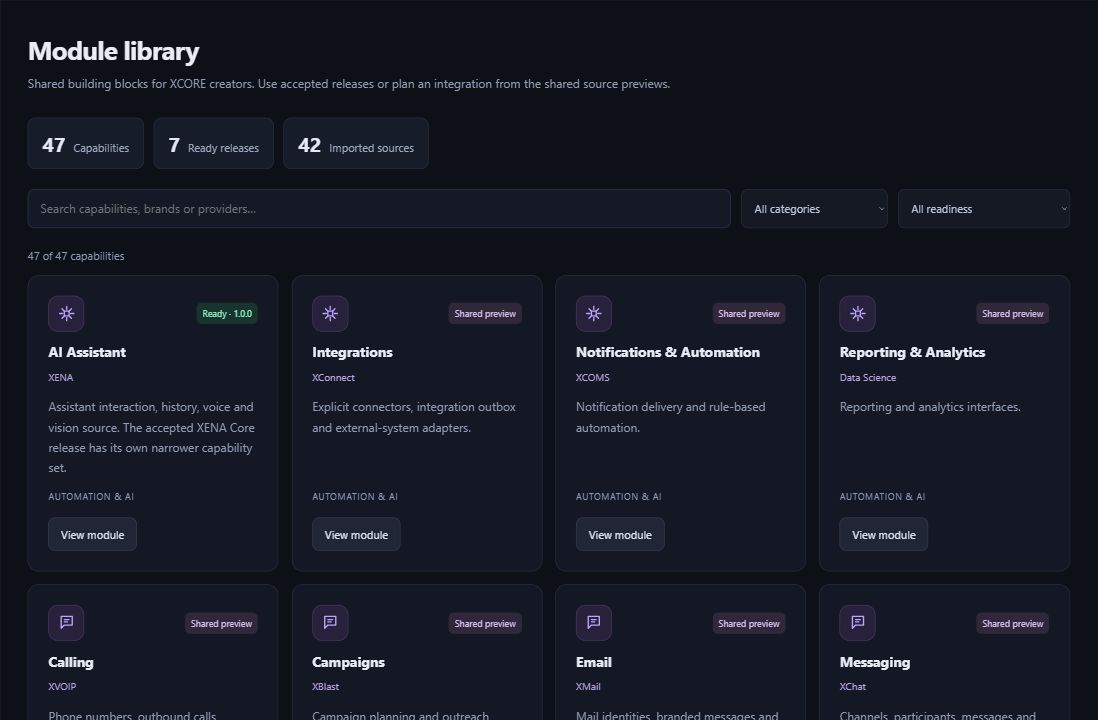
Inside the creation layer · actual XCORE module-library capture, November 2, 2026. Release labels and account permissions apply.
THE PURPOSE IN PRACTICE
Define how business data should be described, understood, documented, and supported across the people who use it.
An illustrative field named completed date may refer to work finished, customer acceptance, or administrative closure. Record the intended definition, type, units, allowed values, source, and relationship to other fields. Clear metadata reduces the chance that two teams use the same label for different stages of work.
02
Keep knowledge connected to change
Scope field descriptions, ownership, supporting guides, change review, and the effect on reports or integrations. A schema change can alter a query or import even when a page still looks familiar. Actual metadata controls and support integrations require configuration; this profile does not assert a fully automated governance system.
WHAT THIS CONNECTS
A clearer view of the work.
01
Describe the data
Identify the meaning, ownership, and business context needed around tables and fields.
02
Share technical knowledge
Discuss the documentation, collaboration, and support needs of the team.
03
Confirm the implementation
Agree which metadata controls, permissions, and support integrations are included in the actual deployment.
PLAN YOUR IMPLEMENTATION
Match the scope to your needs.
Choose the business tools your organization needs. Our team can confirm the app, access, connections and setup for your company before implementation.
No. Types and relationships matter, but business definitions, units, source authority, ownership, and examples often determine whether another person can use the field correctly.
Why do similar field names cause problems?+
A date or status can mean different things across teams and systems. Without a definition, reports and integrations may combine unlike records while appearing consistent on the surface.
Who should own a field definition?+
Identify a responsible business or data owner who can explain its meaning and review changes. Technical administrators may implement the field, but they may not be the people authorized to decide what it represents.
What should happen when metadata changes?+
Review affected forms, imports, queries, dashboards, and documentation. Preserve the reason and timing of the change so later readers can understand why a historical report used a different definition.
THE PEOPLE’S CORPORATION
A future for people.
Personal control. Human opportunity. Stronger local economies and a voice for communities.