Replication creates or maintains a copy of selected information for another purpose. XCORE’s data direction connects that process with schedules, source authority, monitoring, and the limits of the copied view.
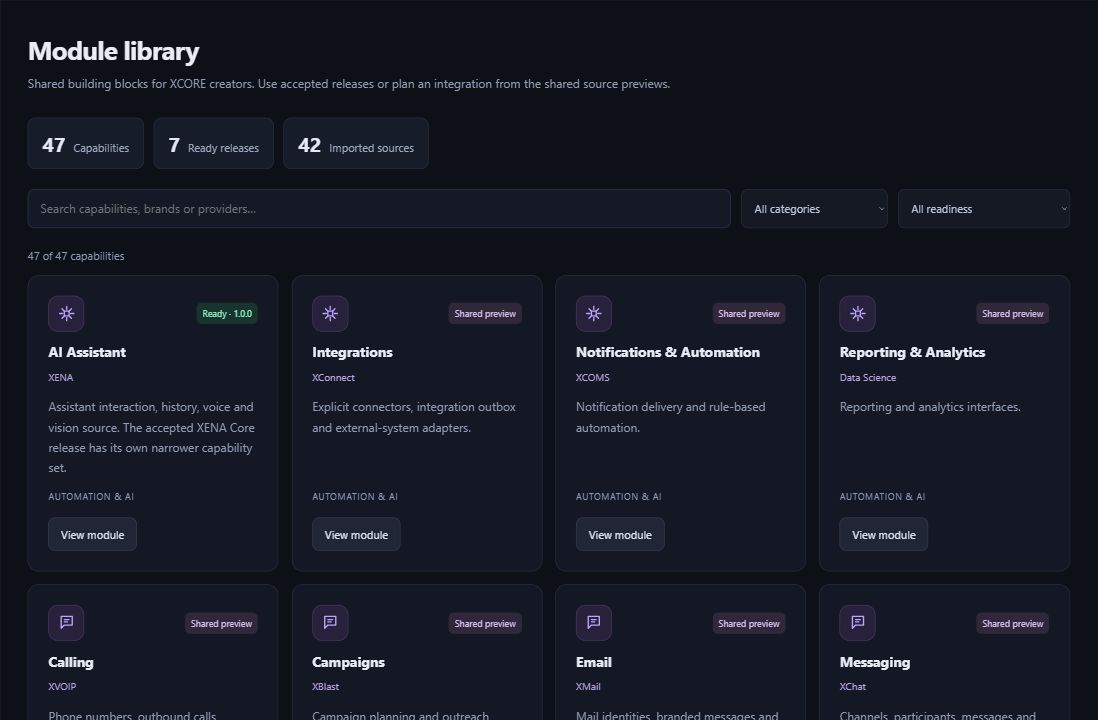
Inside the creation layer · actual XCORE module-library capture, November 2, 2026. Release labels and account permissions apply.
THE PURPOSE IN PRACTICE
Plan data-copy schedules, policies, monitoring, and transfer requirements across infrastructure environments.
An illustrative management report may be useful with a daily refresh, while an operational dispatch view may need a shorter interval. More frequent copying is not automatically better if the source, network, or destination cannot support it. Define the acceptable delay and how users will see it.
02
Plan interruptions and reconciliation
Scope the initial copy, changed records, deletions, bandwidth, authentication, storage, and recovery after missed runs. A replication failure should be visible, with a way to check whether the destination is complete. On-premise, cloud, and hybrid arrangements have different connectivity and operational responsibilities that must be confirmed.
PLAN YOUR IMPLEMENTATION
Match the scope to your needs.
Choose the business tools your organization needs. Our team can confirm the app, access, connections and setup for your company before implementation.
No. It may update on an interval or after defined events. State the expected delay and actual last success so users can judge whether the copy is suitable for their decision.
Does replication replace a backup?+
Not automatically. A replicated mistake or deletion may affect the copy as well. Recovery, retention, and independent backup requirements need their own design rather than an assumption that any second copy provides protection.
What happens when a scheduled run fails?+
The system should record the failure, notify an appropriate owner, and apply agreed retry or reconciliation rules. Users need to know whether a report is stale or incomplete before relying on it.
Can replication work across on-premise and cloud systems?+
That depends on supported interfaces, network access, security controls, data permissions, volume, and operations. The profile describes that deployment direction without establishing a configured connection for every environment.
THE PEOPLE’S CORPORATION
A future for people.
Personal control. Human opportunity. Stronger local economies and a voice for communities.