
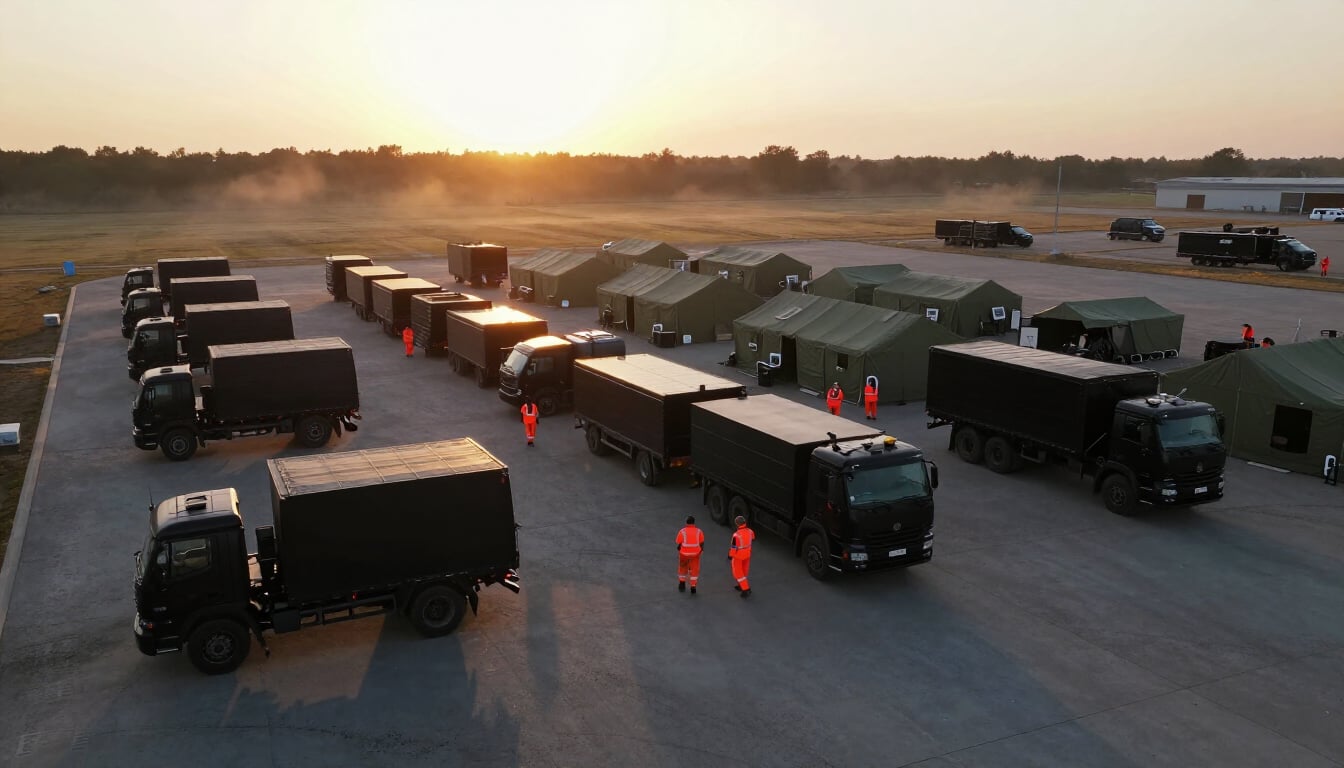

Original Tactical campaign illustration of a response staging area; not a record of a verified deployment.
Original Tactical campaign artwork · illustrative
XGLOBE TACTICAL RESPONSE GROUP

Adopted Cities Program Direction

Plan a connected local operating environment around the municipality’s actual priorities, authority and resources.

INTELLIGENCEPROTECTIONMOBILITYCONTINUITY
TACTICAL / MUNICIPAL PROGRAM

A municipal program starts with local priorities

Adopted Cities is a scoped municipal-planning direction, not an automatic enrollment. The aim is to understand public works, continuity, technology and local capacity in relation to the municipality’s real priorities. Existing systems and qualified local organizations should inform the architecture before new tools are proposed.

Original Tactical campaign illustration of an operations center; not a photograph of a verified operating facility.
Original Tactical campaign artwork · illustrative · Tactical operations-center campaign artwork
WHAT THIS PAGE COVERS
01

Who the direction is for

02

Eight planning pillars

03

Five-stage program process

Understand the practical handoff

A useful starting point is one cross-department need with an authorized municipal owner. From there, an assessment can identify records, procurement, integration and training requirements. A broad program outline should not be mistaken for a deployed city, a funding commitment or a priority-response agreement.

01 / Adopted Cities Program Direction

Who the direction is for

Municipalities, townships, counties and special districts can identify gaps in public works, continuity information, qualified local capacity and technology. The appropriate authorized leader begins a needs discussion; interest does not establish an adopted or deployed city.

  • Cities & municipalities
  • Counties & townships
  • Special districts
  • Emergency-management agencies
  • Public works departments
  • Municipal utility authorities
  • Law enforcement agencies
  • Community development organizations
02 / Adopted Cities Program Direction

Eight planning pillars

The program direction has a broad architecture.

  • Emergency operations: preparedness, staging, assessments, logistics and recovery information.
  • Public works: work orders, maintenance, assets, inspections and projects.
  • Municipal information: departments, properties, incidents and authorized management views.
  • Local provider capacity: identify and review relevant contractors and specialists.
  • Protection requirements: facilities, access, monitoring and security-provider planning.
  • Missing Response: qualified pilot discussions subject to agency authorization and readiness.
  • Business ecosystem: appropriately scoped XPro, Localyze, XCORE, XFUND, learning and community connections.
  • Coordination support: define ownership, onboarding and ongoing responsibilities in the engagement.
Original Tactical campaign illustration of a response staging area; not a record of a verified deployment.
AN ILLUSTRATIVE WORKFLOW

A city concept needs local governance and a practical plan

A proposed city relationship may involve continuity, local providers and coordinated recovery planning. An illustrative scoping process identifies the authorized local contact, existing plans and the specific capacity gap. A city name or program concept does not establish an active municipal partnership. Local approval, resources, program responsibilities and the actual implementation need to be agreed.

Example for explanation · not a live incident or customer case
03 / Adopted Cities Program Direction

Five-stage program process

The proposed lifecycle is useful as a planning framework, rather than a promise of deployment.

  • Submit an interest inquiry with an authorized municipal contact.
  • Assess current infrastructure, public works, continuity and technology needs.
  • Develop the program architecture and proposed scope.
  • Agree any pilot, onboarding, provider review and training before activation.
  • Review continuing coordination, adoption and the next justified improvement.
04 / Adopted Cities Program Direction

Use existing capacity responsibly

Identify current municipal systems and local providers before adding technology. Integration, procurement, permissions, data handling, qualifications and support need practical answers for the specific community.

    05 / Adopted Cities Program Direction

    Prepare an interest request

    Describe the organization, priorities, existing systems and intended decision-makers. Begin through the municipal contact inquiry; this is not an automatic enrollment.

      MAKE THE NEXT CONVERSATION USEFUL

      What to bring
      to the discussion.

      Start with a concise description. Additional records can follow through an appropriate agreed channel.

      Prepare an inquiry
      1. 01

        The authorized municipal or community organization

      2. 02

        The local continuity or recovery objective

      3. 03

        Existing plans, approvals and capacity gaps

      QUESTIONS & ANSWERS

      Adopted Cities Program Direction
      Explained.

      Practical scope, access and next steps.

      Does submitting interest make a city adopted?

      No. Interest, assessment, architecture, an agreed pilot and any later activation are separate stages. A public contract or deployed program is not created by the inquiry.

      Does the program provide funding automatically?

      No predetermined funding is established. Financial arrangements and procurement need a separate approved basis for the specific municipality and proposed scope.

      Must every XGlobe service be activated?

      No. The program direction is broader than any one engagement. Select justified capabilities according to current readiness, local needs and authorized implementation requirements.

      How is the permitted scope confirmed?

      This is a program direction for assessment and scoped discussion. No deployed city, public contract, dedicated liaison, priority emergency response, predetermined funding or full ecosystem activation is implied.

      What should I prepare for this discussion?

      The authorized municipal or community organization; The local continuity or recovery objective; Existing plans, approvals and capacity gaps. Begin with a concise non-confidential description. Additional records should follow through an appropriate agreed channel.

      SEARCH THE WHOLE ECOSYSTEM Press Esc to close
      FIND THE RIGHT FIT

      Your products, side by side.