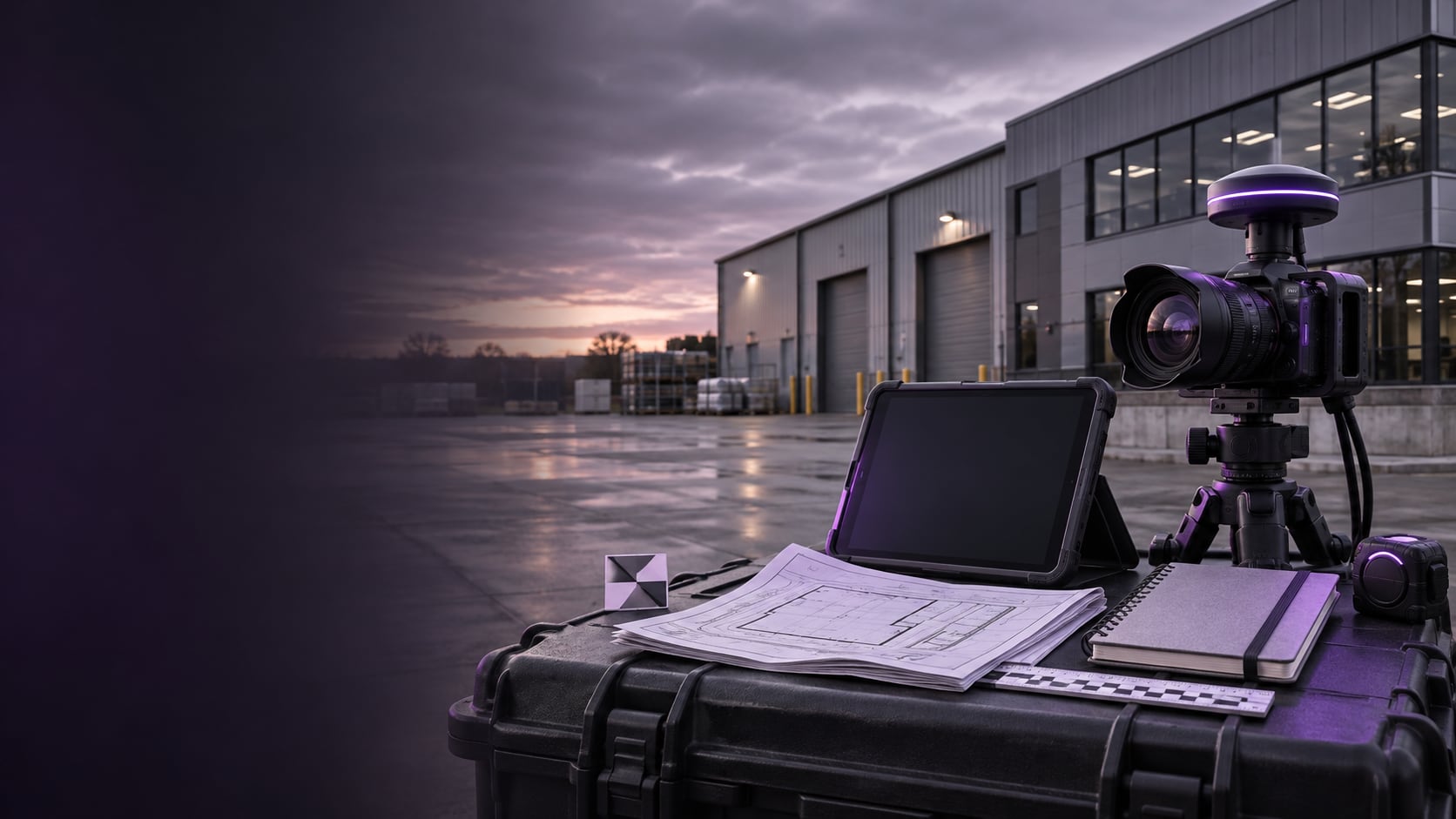
Concept illustration of field documentation equipment, site drawings and a tablet outside a commercial property; not evidence of owned equipment or an actual assignment.
Original Tactical campaign artwork · illustrative
XGLOBE TACTICAL RESPONSE GROUP

Property Claims Documentation

Bring the condition of a property, the history of the loss and the supporting documents into one understandable record.

INTELLIGENCEPROTECTIONMOBILITYCONTINUITY
INTELLIGENCE / PROPERTY RECORDS

Make the loss history understandable

Property-claims documentation connects the condition of a property with the records describing the loss and the work proposed. The value is a traceable file that an owner or appropriately qualified professional can examine. A comparison should show the basis for a difference without turning the difference into an automatic entitlement.

Concept illustration of field documentation equipment, site drawings and a tablet outside a commercial property; not evidence of owned equipment or an actual assignment.
Original concept artwork · illustrative · Tactical field documentation concept
WHAT THIS PAGE COVERS
01

Document the loss

02

Compare estimates and repair scopes

03

Keep depreciation records connected

Understand the practical handoff

For example, two scope versions may use different measurements, items or assumptions. Keep each version and its source clear, connect the relevant photos and identify the questions the reviewer needs to answer. The package supports that review rather than deciding coverage.

01 / Property Claims Documentation

Document the loss

Collect authorized structural, mechanical, environmental and contents information with dates, locations, photographs and condition notes. Separate observed facts, source documents and questions requiring expert examination.

  • Structural damage documentation
  • Mechanical and systems assessment
  • Contents and inventory records
  • Pre-loss condition intelligence
  • Loss timeline construction
  • Before/during/after photo packages
  • Drone and aerial documentation
  • Damage progression records
02 / Property Claims Documentation

Compare estimates and repair scopes

Organize carrier estimates, adjuster reports, contractor documents and repair scopes so a qualified reviewer can see differences, omitted records and the support for each item. Organizing a discrepancy does not decide coverage or entitlement.

  • Estimate comparison and gap analysis
  • Scope-line review and documentation
  • Adjuster report organization
  • Supplement identification support
  • Contractor estimate alignment
  • Work-authorization documentation
  • Change order tracking
  • Communication timeline records
Concept illustration of field documentation equipment, site drawings and a tablet outside a commercial property; not evidence of owned equipment or an actual assignment.
AN ILLUSTRATIVE WORKFLOW

Give the loss record a usable sequence

For an illustrative property loss, a reviewer needs to connect the dated condition photographs, the affected areas and the repair documents. Two estimates may describe different quantities or methods even when they concern the same room. Organizing the supporting records by location and issue helps a qualified professional identify the actual differences and the information still needed. Documentation supports the review; it does not decide coverage or settlement.

Example for explanation · not a live incident or customer case
03 / Property Claims Documentation

Keep depreciation records connected

Track the documents and communications relating to actual cash value, replacement cost and recoverable depreciation. Identify the relevant dates and assumptions for the owner and their appropriate professional to review.

  • ACV vs. RCV documentation
  • Recoverable depreciation tracking
  • Age and condition records
  • Material and component records
  • Manufacturer documentation
  • Installation records
  • Comparable value documentation
  • Depreciation dispute files
04 / Property Claims Documentation

Prepare a review package

Structure the evidence around the loss timeline and the reviewer’s purpose.

  • Condition and damage records.
  • Estimates, measurements and scope versions.
  • Correspondence and decision history.
  • Source references, outstanding questions and supporting attachments.
Explore all 12 topics
  • Claim communication timelines
  • Documentation index and organization
  • Photo and video evidence files
  • Expert report organization
  • Contractor documentation packages
  • Policy and coverage records
  • Submission and response tracking
  • Litigation-support formatting
05 / Property Claims Documentation

Start with the requester’s role

Owners, contractors and claims professionals have different permissions and needs. An assessment establishes the permitted records, intended recipient, delivery scope and qualified review required.

  • Property owners
  • Commercial owners
  • Contractors & restoration companies
  • Property managers
  • Lenders & asset managers
  • Claims organizations
  • Legal professionals
MAKE THE NEXT CONVERSATION USEFUL

What to bring
to the discussion.

Start with a concise description. Additional records can follow through an appropriate agreed channel.

Prepare an inquiry
  1. 01

    Your role in the property or claim

  2. 02

    A general description of the loss and available records

  3. 03

    The review or documentation question

QUESTIONS & ANSWERS

Property Claims Documentation
Explained.

What you can do and how to get started.

Can documentation support decide what the insurer owes?

No. Organizing estimates and records does not determine coverage, negotiate a claim or provide public adjusting. Those decisions and regulated activities remain with appropriately authorized professionals.

Why retain several estimate versions?

Versions can explain when a scope changed and which assumptions supported it. Keep the author and date attached so a qualified reviewer can compare like-for-like information.

What makes a useful loss timeline?

Connect observed conditions, dated images, correspondence and decision records. Distinguish the event date from the date a document was created, and keep missing information visible.

How is the permitted scope confirmed?

Documentation support does not provide legal advice, determine insurance coverage, negotiate another party’s claim or constitute public adjusting. Any regulated work requires an appropriately licensed professional.

What should I prepare for this discussion?

Your role in the property or claim; A general description of the loss and available records; The review or documentation question. Begin with a concise non-confidential description. Additional records should follow through an appropriate agreed channel.

SEARCH THE WHOLE ECOSYSTEM Press Esc to close
FIND THE RIGHT FIT

Your products, side by side.