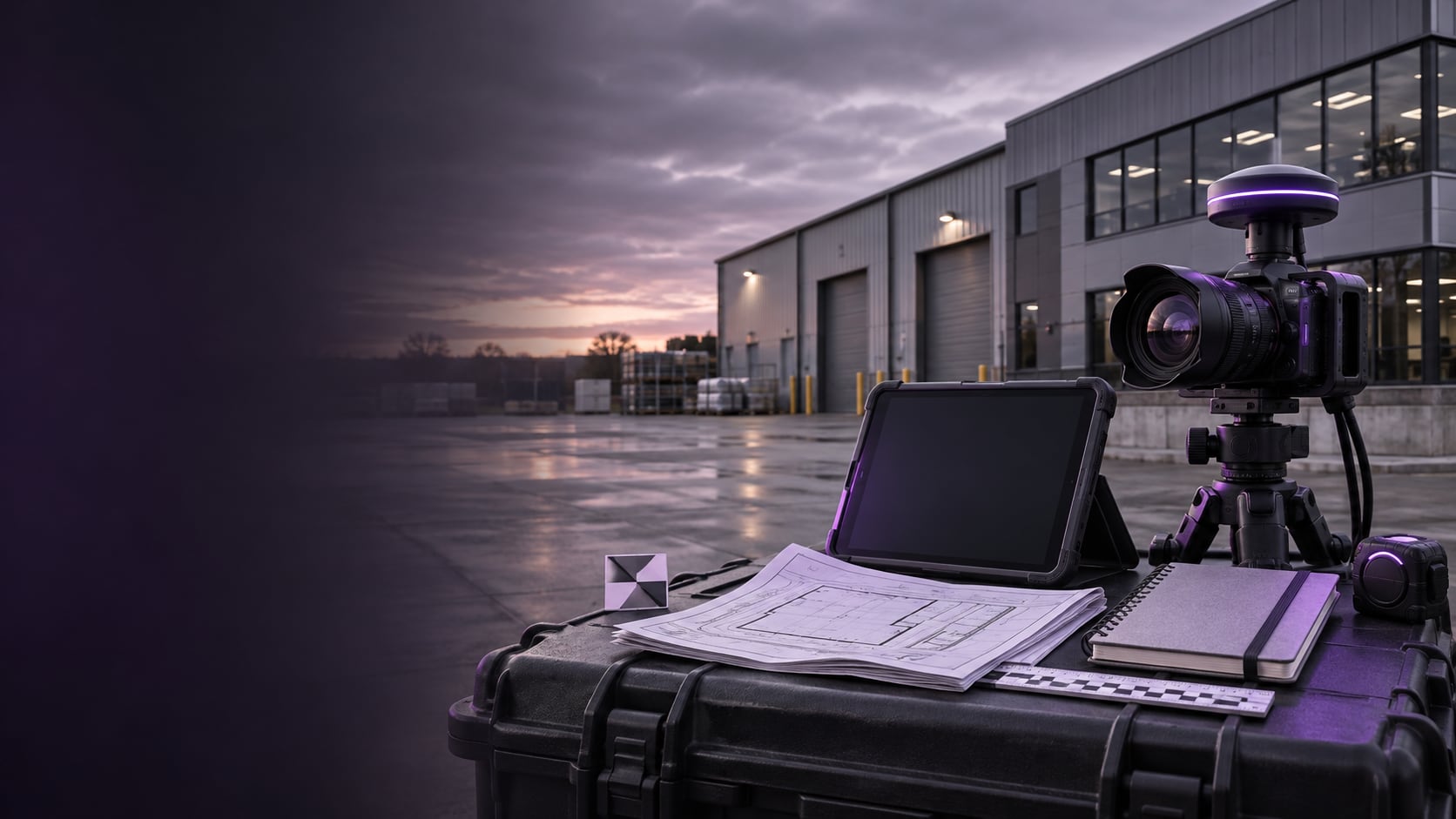
Concept illustration of field documentation equipment, site drawings and a tablet outside a commercial property; not evidence of owned equipment or an actual assignment.
Original Tactical campaign artwork · illustrative
XGLOBE TACTICAL RESPONSE GROUP

Authorized Research & Records

Turn scattered public and authorized information into a record that can be checked.

INTELLIGENCEPROTECTIONMOBILITYCONTINUITY
INTELLIGENCE / AUTHORIZED SOURCES

A research file should make verification easier

Authorized research connects source material, public records and a documented question. The purpose is not to turn association into accusation. A clear file distinguishes a primary record from commentary, shows the date and source, and leaves contradictions open for the authorized reviewer to examine.

Concept illustration of field documentation equipment, site drawings and a tablet outside a commercial property; not evidence of owned equipment or an actual assignment.
Original concept artwork · illustrative · Tactical field documentation concept
WHAT THIS PAGE COVERS
01

Open-source research

02

Public records

03

Timelines and relationships

Understand the practical handoff

An illustrative business-history review may encounter similar names, a shared address or records from different dates. Those relationships need careful attribution. They are context to verify, not proof that the entities are identical or that wrongdoing occurred.

01 / Authorized Research & Records

Open-source research

Identify relevant publicly available sources, record where information originated and distinguish direct records from commentary or unconfirmed statements. Research begins with an authorized purpose and clear boundaries.

  • Online presence documentation
  • Social media record organization
  • Public profile compilation
  • Forum and community records
  • News and media archive research
  • Digital footprint mapping
  • Source verification and attribution
  • AI-assisted search and organization
02 / Authorized Research & Records

Public records

Organize available court filings, property records, registrations, licenses, liens and government records according to the question being examined. A source’s date and limitations remain attached to the information.

  • Court filing research and organization
  • Property ownership records
  • Business registration and history
  • License and certification records
  • Lien and judgment records
  • Regulatory filing research
  • Tax and assessment records
  • Bankruptcy and financial records
Concept illustration of field documentation equipment, site drawings and a tablet outside a commercial property; not evidence of owned equipment or an actual assignment.
AN ILLUSTRATIVE WORKFLOW

Trace a finding back to its source

When reviewing records, preserve original sources and dates, distinguish direct evidence from commentary and note unanswered questions. A timeline helps organize the material. Any investigative work requires appropriate authorization and, where applicable, a licensed professional.

Example for explanation · not a live incident or customer case
03 / Authorized Research & Records

Timelines and relationships

Connect documented events, communications, individuals, organizations and assets. A relationship or shared address is contextual information, not proof of wrongdoing.

  • Event sequence reconstruction
  • Communication timeline mapping
  • Digital activity timelines
  • Financial transaction sequences
Explore all 16 topics
  • Property history timelines
  • Personnel and movement records
  • Decision and action timelines
  • Multi-source timeline correlation
  • Corporate structure mapping
  • Ownership and control charts
  • Affiliate and subsidiary records
  • Personnel connection mapping
  • Asset and property relationships
  • Shared address and contact records
  • Common-interest identification
  • Network visualization support
04 / Authorized Research & Records

Correlate the evidence

Cross-reference records, documents and communications while keeping contradictions and missing information visible. The result is a structured file for the authorized reviewer, not an unsupported accusation.

  • Multi-source document correlation
  • Contradiction and inconsistency flagging
  • Duplicate and version comparison
  • Record gap identification
  • Authentication support documentation
  • Chain-of-custody records
  • Evidence indexing and organization
  • prepared for qualified legal review evidence packages
05 / Authorized Research & Records

Stay within the permitted scope

An assessment identifies lawful sources, the requester’s role and any need for a licensed investigative partner. Covert surveillance, trespass, unauthorized system access and intercepted communications are outside this documentation service.

    MAKE THE NEXT CONVERSATION USEFUL

    What to bring
    to the discussion.

    Start with a concise description. Additional records can follow through an appropriate agreed channel.

    Prepare an inquiry
    1. 01

      Your authority and legitimate research purpose

    2. 02

      The subject and permitted record sources

    3. 03

      The question and review audience

    QUESTIONS & ANSWERS

    Authorized Research & Records
    Explained.

    What you can do and how to get started.

    Are private investigations included automatically?

    No. Activities requiring a private-investigator license or other regulated authorization need an appropriately licensed partner in the relevant jurisdiction. The documentation scope must be agreed first.

    Does a shared address prove a relationship?

    It can be a research lead, but it is not conclusive by itself. Correlate dates and reliable source records, and keep uncertainty clear in the resulting file.

    Does this service include covert system access?

    No. Unauthorized access, intercepted communications, trespass and covert surveillance are outside the described documentation service. Research must follow the permitted purpose and lawful sources.

    How is the permitted scope confirmed?

    Activities requiring a private-investigator license or other regulated authorization must be performed by an appropriately licensed partner in the relevant jurisdiction.

    What should I prepare for this discussion?

    Your authority and legitimate research purpose; The subject and permitted record sources; The question and review audience. Begin with a concise non-confidential description. Additional records should follow through an appropriate agreed channel.

    SEARCH THE WHOLE ECOSYSTEM Press Esc to close
    FIND THE RIGHT FIT

    Your products, side by side.