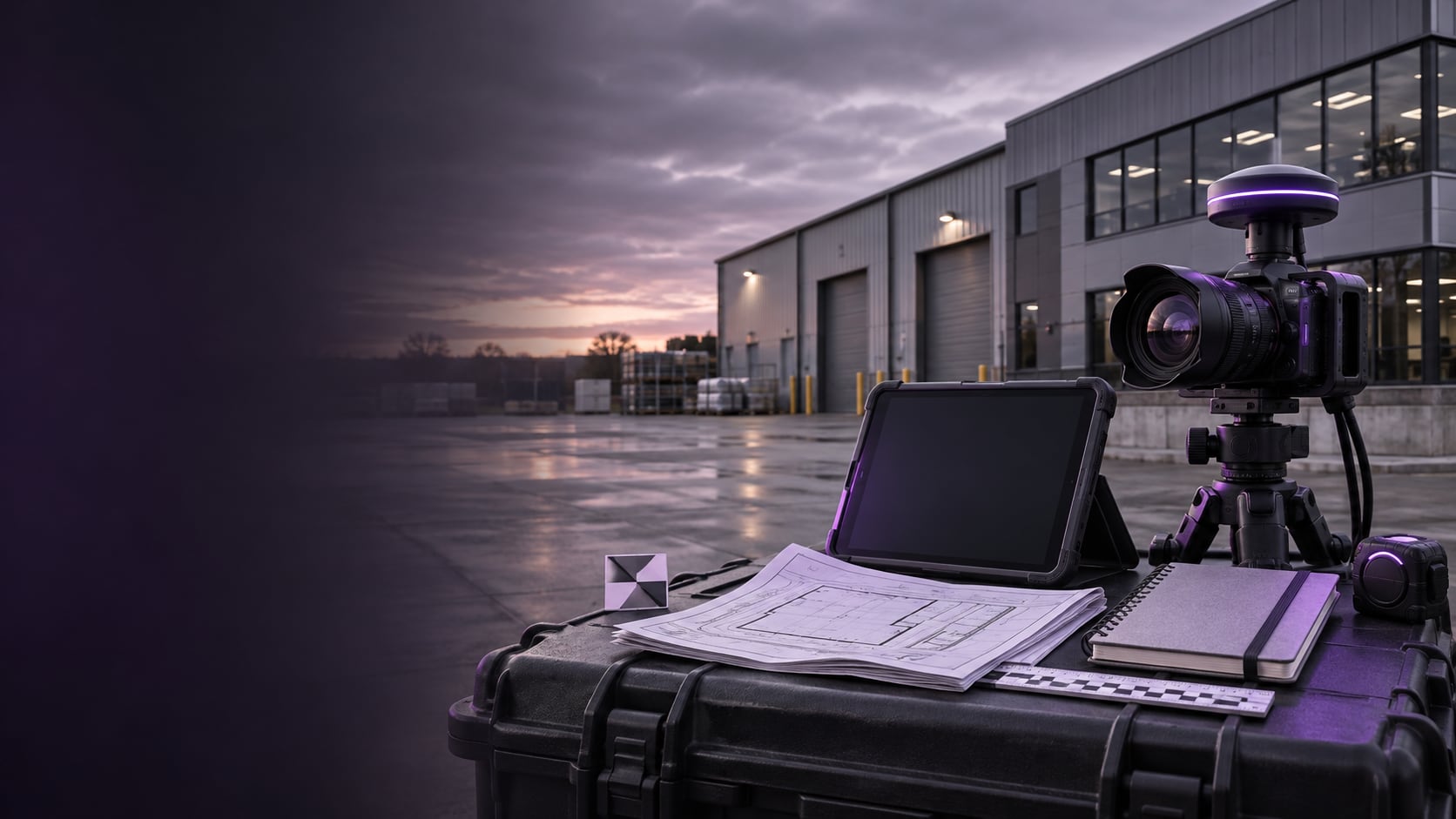
Concept illustration of field documentation equipment, site drawings and a tablet outside a commercial property; not evidence of owned equipment or an actual assignment.
Original Tactical campaign artwork · illustrative
XGLOBE TACTICAL RESPONSE GROUP

Forensic Documentation

Make the evidence easier to inspect without treating a software finding as a forensic conclusion.

INTELLIGENCEPROTECTIONMOBILITYCONTINUITY
INTELLIGENCE / QUALIFIED REVIEW

Organize evidence without declaring the conclusion

Forensic documentation prepares incident, failure and scene information for someone qualified to evaluate it. The discipline is to preserve the distinction between source material, observation and interpretation. An organized reconstruction can reveal the questions that matter without pretending the software has already established cause or responsibility.

Concept illustration of field documentation equipment, site drawings and a tablet outside a commercial property; not evidence of owned equipment or an actual assignment.
Original concept artwork · illustrative · Tactical field documentation concept
WHAT THIS PAGE COVERS
01

Cause and origin records

02

Failure documentation

03

Reconstruct the sequence

Understand the practical handoff

An illustrative failure file may connect a sequence of images with maintenance history, installation information and conflicting accounts. Apparent inconsistencies should remain questions until the underlying material and the appropriate expertise support a conclusion.

01 / Forensic Documentation

Cause and origin records

Organize available incident conditions, chronology, photographs and reports concerning fire, flood, mechanical failure or other property events. The file supports a qualified investigator’s examination rather than declaring a cause.

  • Fire origin documentation
  • Flood and water source analysis
  • Electrical failure records
  • Mechanical causation documentation
  • Weather-event records
  • Human-factor documentation
  • Multi-cause scenario organization
  • Expert-report support files
02 / Forensic Documentation

Failure documentation

Connect records of system, material or structural failure with maintenance history, product information and relevant conditions. Identify the gaps an engineer, manufacturer or other qualified specialist may need to address.

  • Structural failure documentation
  • Roofing and envelope failure records
  • HVAC and systems failure analysis
  • Material defect documentation
  • Construction defect records
  • Product failure files
  • Installation analysis support
  • Manufacturer specification review
Concept illustration of field documentation equipment, site drawings and a tablet outside a commercial property; not evidence of owned equipment or an actual assignment.
AN ILLUSTRATIVE WORKFLOW

Separate the observed condition from the explanation

After equipment fails, organize images, maintenance records and accounts of what happened in sequence. Keep original records and distinguish facts from explanations. A qualified specialist must assess cause and any expert conclusions.

Example for explanation · not a live incident or customer case
03 / Forensic Documentation

Reconstruct the sequence

Arrange scene photographs, measurements, witness records and event times into a traceable reconstruction file. Keep conflicting accounts and uncertainty visible instead of forcing a single explanation.

  • Scene documentation and mapping
  • Incident timeline reconstruction
  • Photographic sequence organization
  • Measurement and dimension records
  • Witness statement organization
  • Video reconstruction support
  • 3D documentation support
  • Reconstruction narrative files
04 / Forensic Documentation

Examine media and documents carefully

A scoped review can organize metadata, versions, apparent inconsistencies and questions in photographs, video or documents. AI may assist searching and comparison, with findings checked against original material and professional judgment.

  • Photo metadata extraction
  • Video timeline analysis
  • Document comparison
  • Anomaly and inconsistency flagging
  • Image authentication support
  • Chain-of-custody documentation
  • Duplicate detection
  • AI-assisted examination — human validated
05 / Forensic Documentation

Agree the expert-review purpose

Define the incident, authorized inputs, intended reviewer and required deliverable before work begins. Formal forensic determinations, engineering opinions and expert testimony remain with appropriately qualified professionals.

    MAKE THE NEXT CONVERSATION USEFUL

    What to bring
    to the discussion.

    Start with a concise description. Additional records can follow through an appropriate agreed channel.

    Prepare an inquiry
    1. 01

      The event and question under review

    2. 02

      Original images, records and known time sequence

    3. 03

      The specialist audience and intended use

    QUESTIONS & ANSWERS

    Forensic Documentation
    Explained.

    What you can do and how to get started.

    Can an AI flag prove fraud or causation?

    No. AI-assisted comparison can help locate material or apparent anomalies, but findings require validation against originals and qualified professional judgment. A flag is not independent proof.

    Does a reconstruction establish an expert opinion?

    Not by itself. Chronology, mapping and document organization support an expert’s review. Formal engineering, forensic conclusions and testimony require the appropriate qualified professional.

    What should remain attached to evidence?

    Keep the original source, dates, versions and handling context understandable. A reviewer needs to know where a record came from and what changes or gaps affect its interpretation.

    How is the permitted scope confirmed?

    AI findings are not automatic proof and do not independently establish causation, fraud, liability, criminal conduct, structural integrity or legal responsibility.

    What should I prepare for this discussion?

    The event and question under review; Original images, records and known time sequence; The specialist audience and intended use. Begin with a concise non-confidential description. Additional records should follow through an appropriate agreed channel.

    SEARCH THE WHOLE ECOSYSTEM Press Esc to close
    FIND THE RIGHT FIT

    Your products, side by side.